
How to Create a Powerful Marketing Funnel Step-by-Step
How the Marketing Funnel Works from Top to Bottom
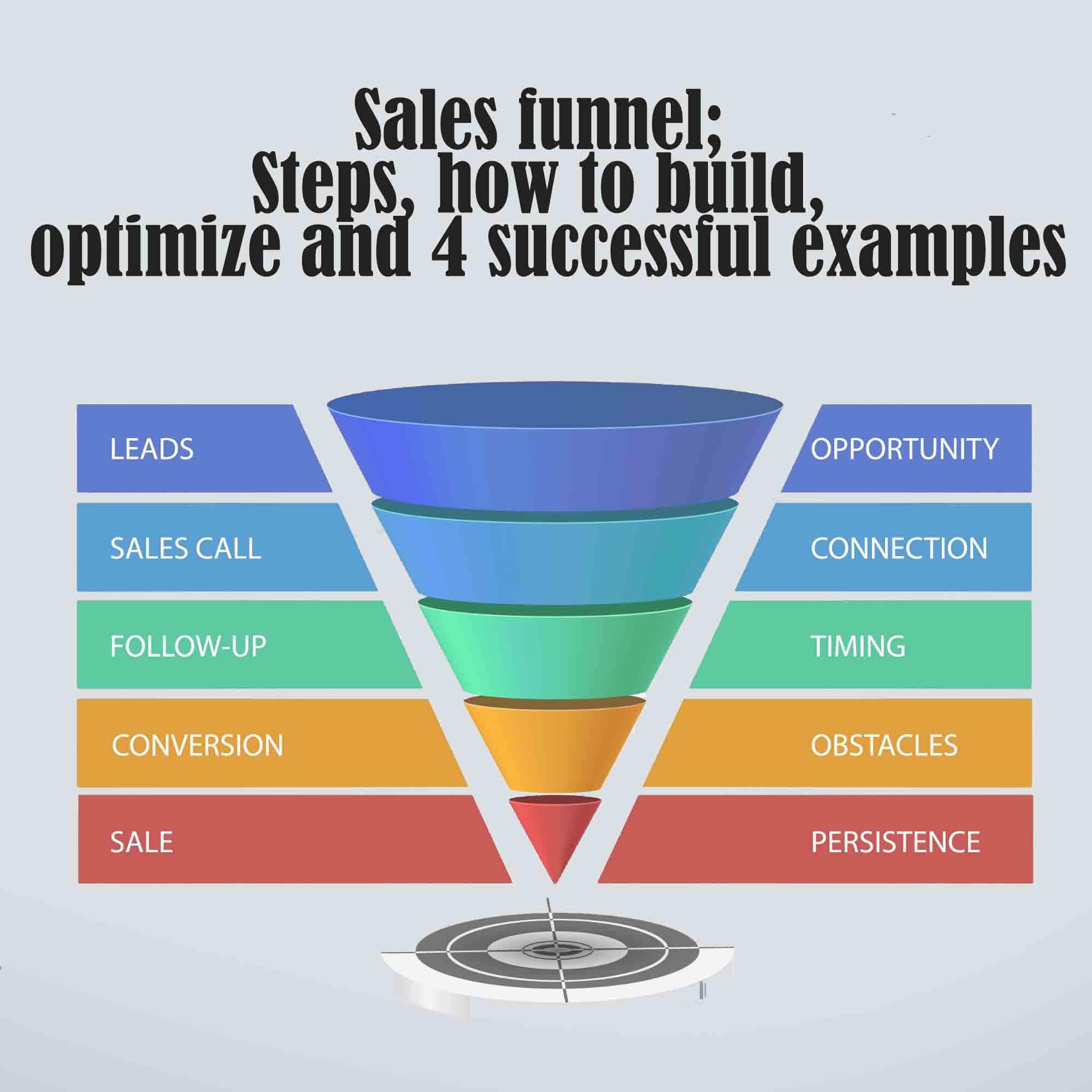
Sales funnel marketing concepts are the steps in which the person who is interested in your business becomes a real customer. In this article, we will introduce you to the sales funnel steps, how it works, 5 steps of making, measuring, optimizing and 4 successful sales funnel examples.
A sales funnel is something that exists in your business, whether you are aware of it or not. Of course, if you are aware of your sales funnel, you will have a greater impact on it.
What is more important than your Purchase funnel? Website optimization at each stage of the sales funnel affects consumer behavior and you need to know them closely. Starting from your website allows you to gather the information you need from the data and get to know your audience better. You will have a better understanding of how your sales funnel looks at how people navigate the website and decide to buy them.
Now let’s look at what a marketing sales funnel is and why it matters.
What is a Purchase and Marketing funnel?
If we want to explain the sales funnel in the simplest way, it is as follows: Website visitors take the path to buy your product or service. Some people stay at the top of the funnel and never leave, and others go to the end of the funnel. The good news here is that you can get people to the bottom of the sales funnel.
The same thing can happen to your website. Instead of sales associates, you have pages that help you guide visitors through the sales funnel.
Why are sales funnel important?
Your sales funnel shows the way website visitors go before they buy items. Knowing the sales funnel can help you find funnel holes. These holes are places where visitors leave and never return to the funnel.
If you do not know your sales funnel, you cannot optimize it. We discuss the features of how the funnel works below, but at the same time you can find out how you can influence how visitors visit the funnel and whether they will eventually become a customer.
This is called marketing, but it is designed specifically, purposefully, and specifically for your target customer.
How does a sales funnel work?
While different steps are used to describe the sales funnel, we use four common terms to describe how each step works that leads a visitor to the buyer.
A visitor will be placed on your website through a social search using a Google link. He is now a visionary. The visitor may review a number of your blog posts or browse your product list. Sometimes you give him a chance to sign up for your email list.
If the visitor fills in your form, it will become a lead or a clue. You can now drive customers from outside your website, such as email, phone or text, or all three.
Leads will want to return to your website if you give them special offers when contacting them, send them information about new blog posts or other interesting messages, or give them a coupon code.
As visitors move this way, the sales funnel gradually becomes narrower. This is because the number of prospects you have at the top of the sales funnel is greater than the number of buyers at the bottom of the funnel indicates that your messaging should be more targeted.
Know the 4 steps of a sales funnel
The four steps of the sales funnel can easily be remembered. Awareness, Interest, Decision or action. These four steps represent the mindset of your future customer. Each step requires a different approach from you or your marketer because you should not send the wrong message at the wrong time. Just like a waiter who asks you what you want for dessert before ordering an appetizing drink.
Let’s look at each step of the sales funnel in more detail.
- Awareness
This is the moment when you first attract the attention of the consumer. This could be a Facebook post shared by your friend on Facebook or a Google search or something.
Your vision becomes aware of your job and what you offer. When the awareness is right, sometimes consumers buy immediately. This is a good scenario in the right place. The consumer has done research before and knows that you offer good quality goods or services at a reasonable price.
Most of the time the awareness stage is a friendly stage. You are trying to bring perspective to your site and engage them with your job.
- interest
When consumers reach the stage of interest in the sales funnel, it means that they are doing research, comparing purchases and thinking about their options. At this stage, you need to eliminate the unbelievable content that helps the customer but does not sell to him.
If you want to impose your product or service from the beginning, you will stop your prospects and turn them away. The goal here is to build your expertise, help consumers make informed decisions, and help them come up with possible solutions.
- Decision making
The decision-making stage in the sales funnel is when the customer is ready to buy. At this stage, he may consider two or three options, of which you are one.
This is the best time to submit your offer. Items such as free shipping, discount code or product bonus are one of these offers. In any case, your offer must be irresistible so that the customer can choose you without delay.
- Action
The customer usually acts at the bottom of the sales funnel. At this stage, he buys your product or service and becomes part of your business ecosystem. Just because a consumer gets to the funnel does not mean your job is done. Action is for both the consumer and the marketer.
In other words, you focus on customer retention. Thank you for your purchase, invite your customer to provide feedback and make technical support available if possible.
How to quickly build a sales funnel
Now you want to quickly create your sales funnel. Don’t worry, it’s not as difficult as it sounds.
Step 1: Analyze your audience behavior
The more you know about your audience, the more effective your sales funnel will be. You do not market to everyone. You are marketing to people who are good at buying and selling.
Things like where do they click? When do they search, how much time do they spend on a particular page? All of these will help you to know and be aware of the audience.
Step 2: Get your audience’s attention
The only way to stop your sales funnel is to try to fool people. To attract an audience, all you have to do is place your content in front of your target audience and follow the organic path and have a variety of content across all your operating systems. Diversify your content with a variety of infographics, videos, and more.
If you want to spend more money, you can use other ads such as B2B ads as well as ads on Google or ads on LinkedIn.
Step 3: Create a landing page
In producing content for advertising or other content, you should introduce your business offers somewhere, and ideally you can direct the audience to the landing page with a suggestion.
Since the number of these people is still small in the sales funnel, focus on attracting and retaining the audience instead of pushing sales. A landing page should take the visitor to the next step. You need to boldly warn your audience about Call to Action, telling them what to do, which could be download a free e-book or a free instructional video.
Step 4: Create a Drop Email Campaign
You can market your leads by providing amazing content via targeted email marketing and Advertising. It’s best to do this regularly, but not too much, and one or two emails a week is enough.
Start by training your market. To do this, you need to ask yourself what the audience wants to learn. What barriers do you need to overcome to convince them to buy?
At the end of your drop campaign, try to make a great offer. This is part of your content that leads to the final stage of the funnel, ie action or action.
Step 5: Stay in touch
Don’t forget your current customers. Instead, try to convince them to keep going. For example, thank them for buying them, give them extra coupon codes, or engage them in your social media space.
Measuring the success of a sales funnel
As your business grows, your sales funnel may need tricks to learn more about your customers and produce a variety of products.
One great way to measure the success of your sales funnel is to track conversion rates. For example, do you know how many people register in your email list after clicking on Facebook ads?
Pay close attention to each step of the sales funnel:
- Have you gotten enough consumer attention with your original content?
- Do your prospects trust you enough to provide their contact information? Have you secured your email marketing campaign and other marketing efforts?
- Will existing customers come back and buy from you?
Knowing the answers to these questions will tell you where to change your sales funnel.
Why optimize your sales funnel?
The fact is that prospective customers have many options. You want them to choose your products or services, but you can’t force them. Instead, you need to have an efficient market. Without a proper and optimized sales funnel, you may lose sales.
How to optimize your sales funnel?
You can optimize your sales funnel in countless ways. The most important places to focus are the areas from which consumers move to the next stage of the funnel.
We’ve talked about ads on Facebook before. You should not run just one ad and it is better to have 10 or 20 ads. These ads may be very similar, but direct them to different buyers and use Facebook’s targeting features to make sure that these ads appear in front of your target audience.
Use A / B testing on your landing pages. It will take time, but you will reach more people and transform your vision with more confidence. You can also use tests A and B in your email campaigns. Modify your images, suggestions, and designs to see how your audience responds.
However, the best way to optimize your sales funnel is to pay attention to the results.
Start at the top of the funnel, produce organic or paid content that encourages people to click on your brand and your CTA. If one type of content does not work for you, you can try something else.
Go to the landing page and make sure the content on your blog or Facebook ads, etc. matches the content in your CTA. Try out body text, CTA titles, and images to see which works best.
Use A and B tests for your suggestions when you ask people to buy from you in the action phase. Small items like free shipping or discount percentages can make a big difference in your income. Finally, track your customer retention rate. Will people come back and buy from you the second, fifth and twentieth time? Do they refer their friends?
Your goal is to keep your brand prominent. If you never disappoint your audience, they will have no reason to look at other sites.
Successful examples of sales funnels
The Crazy Egg sales funnel is at a high level. They have a blog with high quality content. Their sales funnel actually starts from their blog. This means that most of their traffic comes from inbound sources such as Google.
They have a clear call to action or a clear CTA at the bottom of their blog to direct the customer to their email list. There is also a direct CTA for Crazy Egg products, which you will see as a slide in about 70% of posts.
Sales funnel steps
- Get traffic (from referrals, organic, blogs and ads).
Crazy Egg is at the bottom of her blog posts for a free 30-day trial. If you register in the email list, you will be taken to the main page. You will also be linked directly to Crazy Egg at the top of each page.
- Home (Email and password required for the next step)
- Pricing
- Payment form
The pricing page has the same beauty as the rest of the page. This page is very simple and has been like this for over a year and offers free trials. The language of this page is very simple.
After selecting the pricing plan, the last step is to add the billing information, which ensures that no charges will be received within the first 30 days.
Why is this sales funnel successful?
According to Neil Pott, with whom we interviewed last year, Crazy Egg doubled its revenue last year. The focus of their funnel design is on simplicity. There is not much version and instead the focus is on strong images. These pictures are one of the things that really stands out about Crazy Egg.
What makes this sales funnel unique?
Crazy Egg informs them instead of bombarding the customer with information. The information is clear and reliable, so customers know what to do before sending their email address.
How could it be better?
When I first wrote this article in 2011, I explained how the marketing version for thermal mapping could help customers better explain. Of course, this information, thanks to accurate images and simple design, allows the reader to clearly understand it, but with more explanation, this information can be improved.
Example 2: AUTOGROW
I do not want to update Auto Grow in this list. I have always written about how your sales funnel grows and improves, but have you ever wondered what my company sales funnel is like? I will describe it now.
Sales funnel steps
- Get traffic (via organic or referral from com blog)
- Home (registration required by email is required for the next step)
Our newsletters, blogs and multi-day courses all return to the home page. At that point you go to the pricing page from the main page.
- Pricing page
Many customers like to watch our trial version before it is finished. They often sign up after seeing our demo.
Why is this sales funnel successful?
We have made everything we do quite clear and we are selling a monthly service at a higher price.
Example 3: Grasshopper
This name, which means locust, has not changed since it was last covered. But this is not a bad thing. When I wrote an article specifically for them, I mentioned how they make at least $ 60 million a year. They really do have marketing power.
Let’s take a look at their sales funnel.
Sales funnel steps
- Get traffic (via PR, blogs and ads)
- Main Page
The version has minor changes, but the meaning is the same. They still offer the same 30-day money back guarantee. Their services are described in a two-minute video and are also explicitly mentioned on YouTube. Increase Customer and Sales, optimization methods and other important points, be sure to read this article. Rest assured that the least you can read in this article is a few percent more profit in the business.
The brand personality (which is the symbol of the locust) has made it easy to use their products. They have also come up with a new design that helps make their product simple.
- How it works and features
The page explains how the service works in a clear and in-depth way. They also repeat this video on the home screen. At the bottom of the screen is a CTA or call to action button that helps you not to miss it.
- Pricing page
The Grasshopper pricing page has not changed.
- Registration Form
You must first select a phone number to register. You can get a local number and a toll-free number. On the next page, you can access the text of the message to that number. Finally, you go to the billing page which has not changed at all.
Why is this sales funnel successful?
In my exclusive post about this site, I mentioned design changes that improved the locust shape of this site with colors and other elements. They have even reduced their sales funnel to make it better. What they are doing is clearly fruitful. Even after years, this site has not changed.
What makes it unique?
Their locust-shaped brand personality makes it easy to use their product. They continue this plan by simply talking to the audience.
How can it be improved?
There are still criticisms of this sales funnel. The locust symbol can still attract an audience. Also, a large number of customers because they do not have several phone numbers and professional systems connected to their jobs.
I also emphasize that they need an explanation of the 30-day savings guarantee for customers. They need to explain this in advance so that it is not questionable for customers.
Example 4: TARGETEDWEBTRAFFIC.COM
Unlike Grasshopper, TargetedWebTraffic.com has changed a lot. They are constantly experimenting with new designs. Their homepage is always changing. They show a lot of social proof and a lot of focus on problem solving. They are also very visual and use a lot of cartoons and paintings.
Basecamp feels very personal. Users share their letters in descriptions, emphasizing more social proof. However, these are presented in a unique way.
Sales funnel steps
- Get traffic (via blog, PR and organic search traffic)
- Main Page
The current version of Basecamp is in the testing phase but as mentioned it is impressive. In addition to social proof, their descriptions and cartoons attract attention.
- Free 30-day trial registration
As we said, the Basecamp exam is free, and you do not need to fill in your credit card information at first. They have kept their pricing information very simple.
Thank you, page, (not so important but noteworthy)
Why is this sales funnel successful?
Basecamp has a lot of social proof, and its new design emphasizes this more than ever. They really advertise for free and who does not love free stuff?
What makes it unique?
Every company wants to solve problems for its customers. Targeted Web Traffic has given a lot of importance to its customers. Talking to customers has taken place on a very natural and real level.
How could it be better?
I haven’t had much criticism of Targeted Website Traffic before and I still don’t. People may find their user experience more personal, and that’s the only criticism I can make. Conversion rate refers to the number of people who reach your goal from the total audience of your website or business.
Our mission at Targeted Web Traffic is to help businesses grow. Our only question is – will yours be one of them?